
ADHD Procrastination: Understanding Task Avoidance and How to Break the Cycle

You sit down to tackle the big project. Fifteen minutes later, you are reorganizing the pantry. An hour after that, you have somehow deep-cleaned the bathroom and started a loaf of bread. The project? Still untouched.
This is not a character flaw. It is your brain doing something called positive procrastination, and understanding it might be the first step to actually getting unstuck.
What is Positive Procrastination?
Positive procrastination is when you sidestep the thing you need to do by doing other things that feel productive. You are not sitting there doing nothing. You are mowing, baking, answering emails from two weeks ago, reorganizing your sock drawer.
Here is what those tasks tend to have in common. They have clear steps. You know exactly what comes next. They offer visible progress (hello, beautiful lawn lines). And somewhere in the back of your mind, you already believe you can pull them off.
The task you are avoiding? Usually not so clear-cut. And that murkiness is often exactly why it is so hard to start.
And Sometimes You Have Task Paralysis
Sometimes the avoidance does not look like productive busyness. Sometimes it looks like being completely absorbed into the couch, unable to get started on anything. This is called task paralysis, and it is just as common with ADHD.
Doom scrolling. Zoning out. Feeling frozen even though you know you need to move.
This is not laziness either. It is a sign that your nervous system is overwhelmed, and your brain has essentially hit a wall.
Both positive procrastination and task paralysis tend to begin the same way.

The "Ugh" Feeling
You know the one. That low-grade dread that settles in when you think about the thing on your list. It does not always have a name. It is just... ugh.
Here is the thing: that feeling is actually useful information, if you catch it in time.
Before the "ugh" sends you spiraling into avoidance, try to pause and look at the thought underneath it. Often it sounds something like:
"I've already fallen behind. What's the point of even trying now?"
"This isn't due for a while. I'll deal with it when it's actually urgent."
"I don't even know where to start with this."
"I'm probably going to do it wrong anyway, so why bother?"
"This feels too big. I'll wait until I feel ready."
Once avoidance kicks in, that uncomfortable feeling often fades temporarily. The task becomes a "future me problem," and there is momentary relief in that.
But future you is going to inherit all of that dread, plus the added weight of time pressure. It compounds rather than dissolves.
Rewriting the Story You Tell Yourself
Here is where things get interesting. A lot of ADHD-related procrastination is not just about the specific task in front of you. It is about a deeper narrative you carry about yourself in challenging situations.
The good news is that narrative can be updated, and it does not require anything fake or forced.
Think back through your life and find a moment where you genuinely came through for yourself. A hard season you navigated. A project you pulled off under pressure. A challenge you got through in a way you did not expect. It does not have to be dramatic. It just has to be real.
Now look at what strengths showed up in that story. What does it say about you?
This is not "positive affirmations embroidered on a pillow" territory. This is actual, evidence-based self-knowledge grounded in things that really happened. Your new narrative might sound something like:
"When I am up against something hard, I have a figure-it-outedness that kicks in."
"I might struggle, but I have gotten through hard things before, and I will again."
"I work differently, but I get there, and I always find a way."
"I am more resourceful than my anxiety gives me credit for."
Those old automatic thoughts do not disappear overnight. But the more you practice reaching for the new one, the more it starts to feel like something you can actually access when you need it.
One more tool worth mentioning: think of someone in your life whose voice makes you feel capable. A parent, a coach, a teacher, a friend. When you are stuck, borrow that voice. Imagine them, clearly and specifically, saying "you can do this." It sounds almost too simple. It genuinely helps.
Practical Strategies to Get You Moving
Shifting your internal narrative is foundational. But it still needs some backup to get you moving in the real world. Here are some strategies worth trying:
Find your "why." Wanting to do a task is not actually a prerequisite for doing it. But having a reason that connects to something you care about makes a real difference. Does finishing this give you more uninterrupted time with people you love? Does it move you closer to a goal you actually want? Does it mean future-you gets to breathe a little easier? Any honest "why" will do. And if you genuinely cannot find one, it is worth asking whether this task needs to happen at all. Prioritizing is an executive function too.
Get it out of your head and onto something external. If you have ADHD, your working memory is already doing a lot. Trying to also hold your entire to-do list in your brain adds cognitive weight and quiet background anxiety, even when you are not consciously thinking about it. Tasks that live only in your head tend to feel vague, sprawling, and urgent all at once, which is a perfect recipe for avoidance.
The fix is deceptively simple: externalize. Get tasks out of your mind and into a planner, a notebook, a whiteboard, an app, whatever system you will actually use. This is not just about organization. It is about relieving your brain of the burden of remembering, so it can focus on actually doing.
A planner or agenda is especially useful because it lets you spread tasks across time rather than treating everything as one undifferentiated pile. When you can see that Monday has two things, Wednesday has three, and Friday has one, the week becomes navigable instead of overwhelming. Nothing sneaks up on you as "suddenly urgent."
When you build your list, the goal is a daily checklist and a broader weekly view working together. The daily list handles what needs to happen today. The weekly view helps you spot when something is creeping toward its deadline and gives you a chance to move it before it becomes a crisis.
But here is the key part: a task is not really on your list until you have defined when, where, and how.
"Call insurance company" is not a complete task. It is a vague intention, and vague intentions are easy to skip. A complete task sounds more like: "Call insurance company on Tuesday at 10am from my home office, with my policy number pulled up in advance." Now there is nothing left to figure out in the moment. The decision-making is already done, and all that is left is following the steps.
Breaking it down this way matters for a few reasons. First, it eliminates the activation energy that comes from having to figure out logistics on the fly. Second, it makes the task feel smaller because you can see it clearly. Third, it gives you something specific to put on the calendar, rather than letting it float indefinitely.
As you build out your list, prioritize. Not everything carries the same weight, and trying to treat it all equally is part of what leads to spending an afternoon on low-stakes tasks while the important ones keep getting deferred. Ask yourself: what actually needs to happen today, versus what would just be nice to get done?
Your written list also gives you useful feedback about your own patterns. If you look back at the end of the day and notice that you reorganized your files and cleaned out your email but did not touch the report that was your actual priority, that is the positive procrastination trap in action. The list makes it visible in a way that a mental to-do list never can.
Make the task concrete. Vague tasks breed avoidance. "Clean the kitchen" is hard to start. "Unload the dishwasher" has a clear beginning, a clear end, and you know exactly when you are done. That specificity matters more than it sounds. Break bigger tasks into the smallest observable steps you can identify, and define what "done" looks like for each one. For a large project, this might mean spending a few minutes upfront just listing the sub-steps before you try to do any of them. That planning time is not procrastination. It is setup, and it makes starting significantly easier.
Start with the smallest possible behavior. When initiation is the hardest part, identify the tiniest action that gets your hands on the task. Read the assignment prompt. Find the bill in the pile. Open the document. Pull up the email draft. That is it. No need to commit to more than that. Starting often provides enough momentum to carry you forward.
Use microchunking for overwhelming tasks. If a task feels too large to approach, set a timer and work on it for a short, defined burst. Ten or fifteen minutes of focused effort is a lot more approachable than "write the report." This shrinks the task to something your brain can actually get traction on, and it keeps visible progress happening.
Try the Pomodoro Method for sustained work. The Pomodoro technique involves 25 minutes of focused work, followed by a 5-minute break, repeated in cycles. After four rounds, you take a longer break. It gives your brain regular recovery windows and helps you sustain effort over longer stretches without hitting a wall. If 25 minutes feels like too much to start, adjust it. The principle matters more than the exact timing.
Build in real rewards. ADHD brains often struggle to stay motivated on tasks that do not have immediate, visible payoff. Create that payoff intentionally. After you finish a chunk of work, do something you actually enjoy. A walk, a snack, a few minutes on your phone, a cup of something good. Not as a bribe, as a genuine acknowledgment that you did something hard and it deserves recognition.
Strategies Should Be Adaptive to You
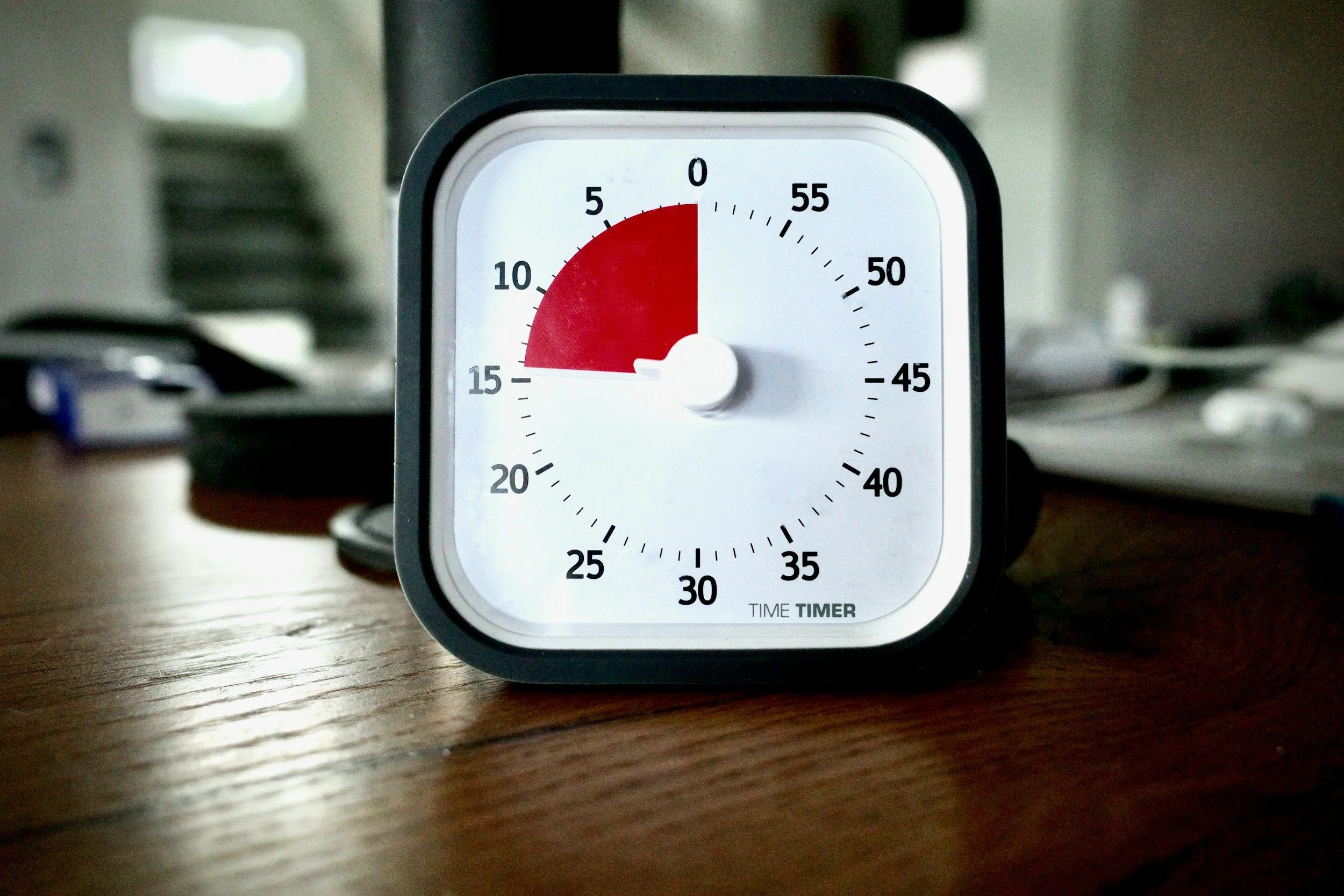
None of these strategies will work perfectly the first time. That is not failure. That is just how behavior change works, especially when you are working against patterns that have been around for a long time. Try something, notice what helps and what does not, and adjust. The process is meant to be iterative.
And at the core of all of it is not just the strategies. It is the shift in how you talk to yourself when things feel hard. Catching the automatic thought, pausing, and reaching for the narrative that actually reflects your strengths: that is the real work, and it is worth doing.
Wondering if ADHD Is Part of the Picture for You?
If these patterns feel deeply familiar, and you have wondered whether ADHD might explain why some things feel so much harder than they seem like they should, it may be worth exploring if ADHD may be part of the picture for you.
A comprehensive psychological evaluation can help you understand how your brain works, what is driving the patterns you experience, and what kinds of support are most likely to actually help. At Campbell Psychological Wellness, we offer thorough ADHD evaluations for teens and adults in Richmond, Virginia. Learn more here or reach out to get started.