
Does My Child Have Dyscalculia? What Parents Need to Know About Math Learning Disabilities

Math struggles are easy to dismiss. We tell ourselves that some kids are "just not math people,” that it runs in the family, or that they'll catch up eventually. But when a student consistently falls behind despite effort and support, the explanation may be neurological, not motivational. That explanation has a name: dyscalculia.
Dyscalculia is one of the least recognized and least screened-for learning disabilities in schools today. And yet it affects an estimated 5–8% of the population, as many children as dyslexia. Understanding what dyscalculia is, how it shows up, and why early identification matters can be the turning point a struggling student needs.
What is Dyscalculia?
Dyscalculia is a developmental neurological condition that affects a person's ability to understand and work with numbers and mathematical concepts. It is not caused by poor instruction, lack of effort, or low intelligence. Like dyslexia, it reflects a difference in how the brain processes numerical and mathematical information.
Importantly, dyscalculia is not simply "being bad at math." It is a specific learning disability with identifiable subtypes, each pointing to a different underlying source of difficulty.
Is Math Really That Complicated? (Yes, more than we think)
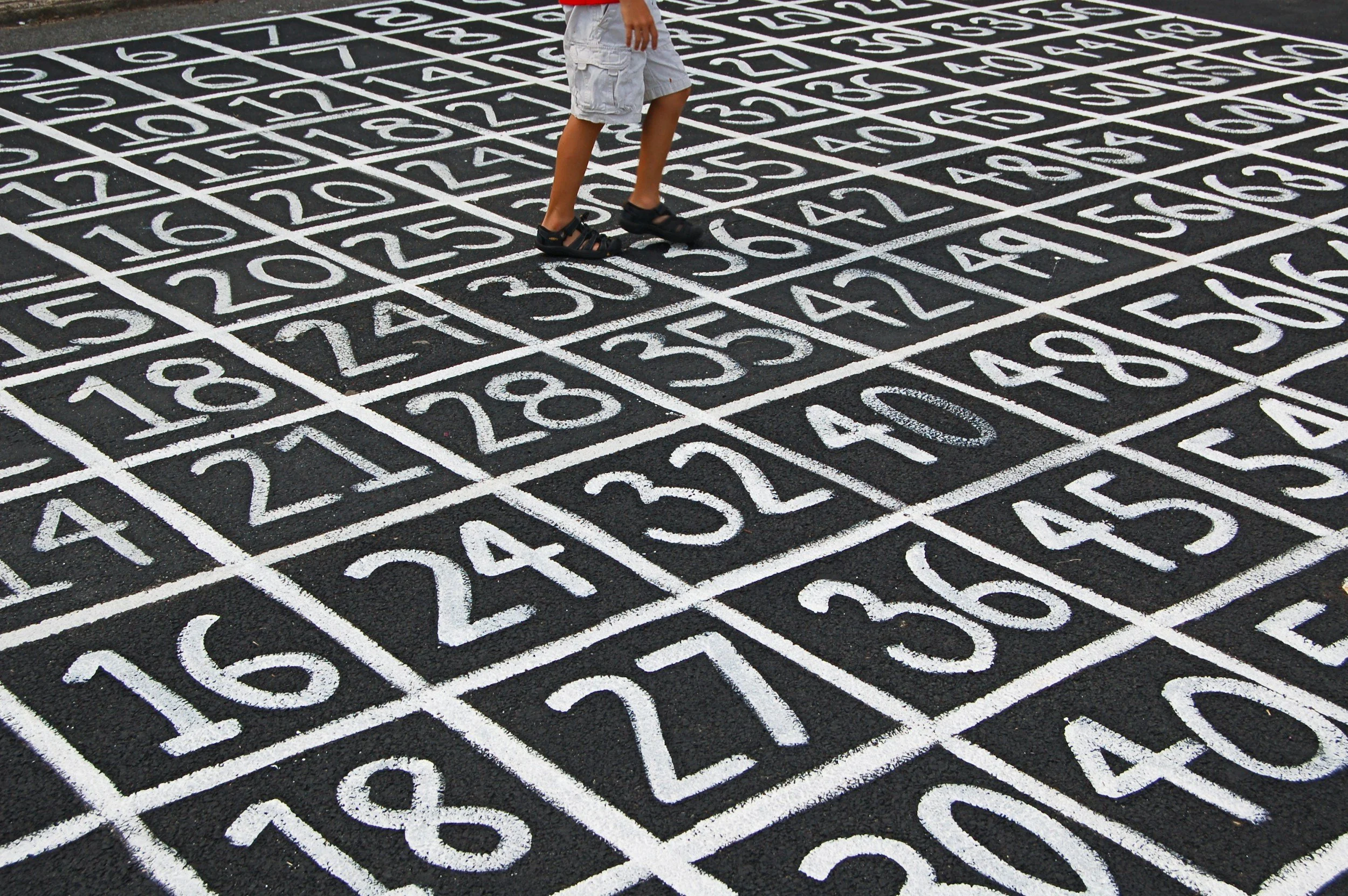
Math has an undeserved reputation for being stable and straightforward. In reality, it is one of the most linguistically and conceptually demanding subjects a student encounters.
Consider: the word third can refer to a position in a sequence (first, second, third) or a fraction (one-third). The symbol x means multiplication in elementary school and then, sometime later, becomes an unknown variable in algebra. Students are expected to absorb these shifts without explicit instruction, which is a tall order for anyone, and particularly steep for those with a math learning disability.
Beyond vocabulary, foundational math concepts build on each other in a strict sequence. Early mathematical development begins with subitizing, the automatic ability to perceive a small quantity without counting (recognizing four dots instantly, for example). This gives way to place value, then to the math and addition operations, and eventually to concepts like fractions, where students must deeply understand that a unit like "4" can itself be divided into parts. If subitizing never becomes intuitive, if the feel of numbers never quite solidifies, the entire structure above it becomes unstable.
Developing math skills requires visual-spatial abilities, working memory, quantity processing, and the rapid retrieval of numerical information. Difficulty in any one of these areas can translate into meaningful struggles in the classroom.
The Three Subtypes of Dyscalculia
Not all math learning disabilities look the same — which is exactly why a thorough evaluation matters more than a simple "math is hard" label. Dyscalculia is generally understood to fall into three overlapping subtypes:
Verbal Dyscalculia This subtype involves difficulty with the language and memory demands of mathematics. Students may struggle to rapidly recall multiplication facts, learn math vocabulary, or memorize formulas. The problem is less about understanding the concept than about retrieving the associated language quickly and reliably.
Procedural Dyscalculia This subtype is marked by difficulty following multi-step procedures and mathematical sequences. Long division, solving equations with multiple steps, or keeping track of the order of operations may present particular challenges. These students often understand what they are trying to accomplish but lose their place in the how.
Semantic Dyscalculia This subtype involves difficulty with number sense and the conceptual, spatial understanding of quantities. A student with visuospatial dyscalculia may struggle to grasp that twelve is composed of one ten and two ones, that it sits closer to ten than to thirty, or that it can be broken into two groups of six. Estimating amounts, mentally manipulating numbers, or understanding the relative size of quantities can all be affected.
Many students present with a combination of these subtypes, which is one more reason why identifying which subtype is present matters so much for planning the right intervention.
Why Early Identification Is Critical
Because math is cumulative, gaps compound. A child who never fully grasps what "4" means will struggle when multiplication asks them to group fours. That struggle will amplify when fractions ask them to divide fours. By the time algebra arrives, the deficit may look like a global failure at math when it was actually one foundational crack that widened with each passing grade.
Early identification interrupts that cycle. It also opens access to accommodations and interventions before a student has spent years absorbing the message that they are simply bad at math.
Many children begin to develop increasing frustration and avoidance around math tasks over time. In some cases, these repeated experiences can contribute to math anxiety, a learned emotional and physiological response to math that can further interfere with working memory, confidence, and performance.
Dyscalculia also commonly co-occurs with dyslexia, and both can overlap with executive functioning difficulties. A comprehensive evaluation looks at the full picture — not just math performance in isolation.
What Works: Intervention and Accommodations
Research is clear that the most effective interventions for dyscalculia use a multisensory, explicit, and conceptually grounded approach. This means moving away from rote memorization and toward genuine understanding of mathematical concepts, using physical tools like dominoes, dice, playing cards, and base-ten blocks to make abstract quantities concrete through touch, sight, and sound.
Standard tutoring designed to raise grades is not the same as targeted math intervention. Students with dyscalculia need interventionists who use evidence-based strategies matched to the specific subtype at play.
Evaluations also inform meaningful accommodations, which may include:
Extended time on assessments
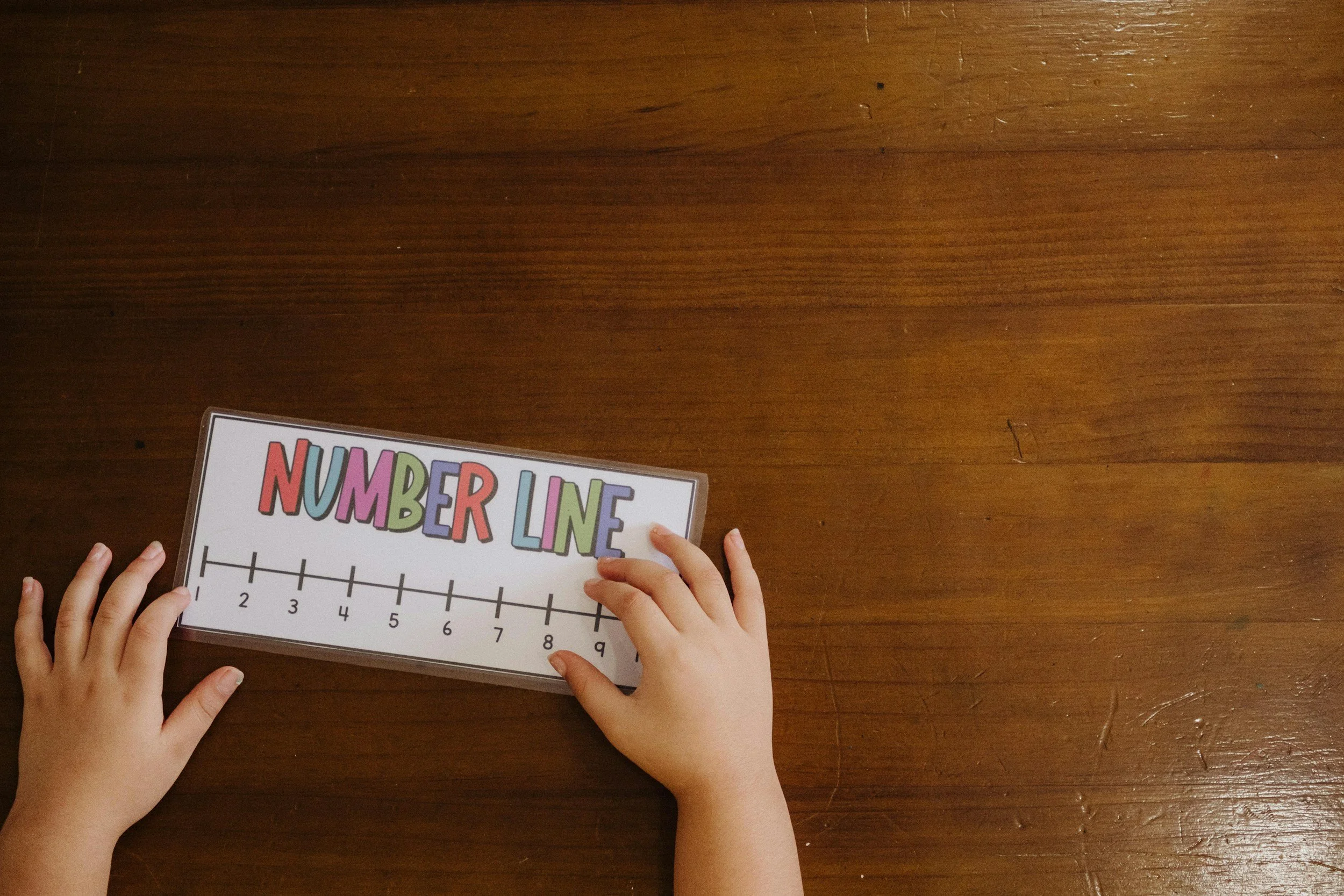
A number line on the desk
Word banks for math vocabulary
Graph paper to support alignment and organization
Visual references for formulas and order of operations
Reduced number of problems per page
Targeted, focused number fact sets
The most impactful accommodations are often input accommodations, adjustments to how information is presented and learned and not just output accommodations like extra time. Accommodations should be informed by the critical information answered in comprehensive psychoeducational evaluations: why math is difficult.
The First Step: A Comprehensive Evaluation
Before any effective intervention or accommodation can be put in place, the foundation is identification. A psychological evaluation does not simply confirm that math is hard, it maps why it is hard. It identifies the specific subtype of difficulty, uncovers any co-occurring conditions, and highlights the student's strengths that can be used to scaffold new learning.
At Campbell Psychological Wellness, we conduct comprehensive psychological evaluations designed to give your student and your family a clear picture and a practical path forward. The data from an evaluation equips schools, educators, and families to implement interventions that are genuinely targeted, not generic.
Ready to learn more? Explore our full overview of dyscalculia, how it’s evaluated, and what to expect from the process.
Campbell Psychological Wellness provides comprehensive psychological evaluations for children and adolescents. If you have questions about whether an evaluation is right for your student, we welcome you to reach out.