
What is Camouflaging? Understanding Masking in Autism and ADHD
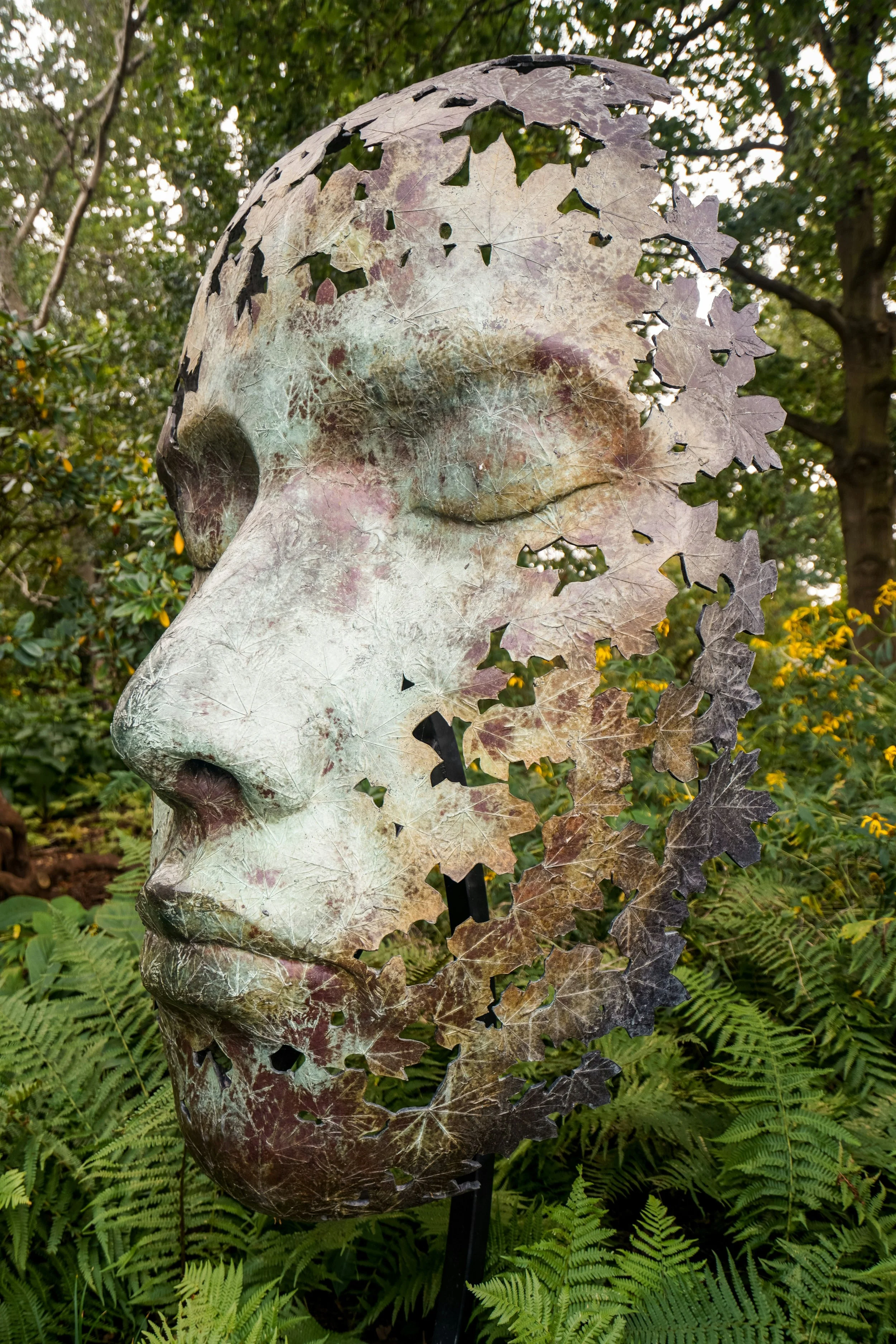
What is Camouflaging?
Camouflaging, sometimes called masking, refers to the conscious or unconscious strategies people use to hide natural traits, typically to fit social expectations or avoid rejection. The term is widely used in autistic and neurodivergent communities to describe the effort of suppressing behaviors or concealing social difficulties.
Researchers have identified three overlapping components of camouflaging (Hull et al., 2018):
Masking involves actively hiding or suppressing internal experiences or behaviors: for example, resisting the urge to stim, forcing yourself to stay still when you're hyperactive, or holding back an intense interest because you sense others won't engage with it.
Assimilation means adapting to a social environment to appear neurotypical: for example, engaging in small talk even when it feels pointless, practicing eye contact that doesn't come naturally, or mirroring the body language of the people around you.
Compensation involves developing workarounds that meet your needs in more socially accepted ways, such as scripting conversations ahead of time, working remotely to reduce sensory overload, or preparing extensively before meetings to avoid appearing distracted.
The goal is usually practical: to be taken seriously at work, to avoid social friction, to belong.
Who Camouflages?
Almost everyone adjusts their behavior in different social contexts. That's a normal part of impression management. But not everyone is camouflaging to the same degree, or at the same cost.
Research suggests that social anxiety is a strong predictor of camouflaging in the general population (Lorenz & Hull, 2024). Among neurodivergent groups, camouflaging is significantly more common than in neurotypical populations and within neurodivergent groups, autistic people tend to camouflage more extensively than those with ADHD (van der Patten et al., 2024).
The mechanism also differs. Autistic people often rely on conscious, effortful monitoring of social cues such as tracking patterns, deploying learned scripts, and analyzing interactions in real time rather than processing them intuitively. People with ADHD, by contrast, tend to camouflage through overpreparing, double-checking their own behavior, and working hard to conceal distractibility. Both require significant cognitive and emotional resources.
The key distinction: neurotypical social adaptation generally happens with relative ease. For many neurodivergent people, it requires sustained, deliberate effort, effort that isn't always visible to others, or even to the person doing it.
The Long-Term Cost of Masking
Camouflaging can be a genuinely useful tool. In the short term, it can protect someone socially, open professional doors, and help them navigate environments that weren't designed with them in mind. But consistent, indiscriminate masking carries real risks. Research associates long-term camouflaging with:
Emotional exhaustion and burnout
A persistent sense of disconnection from one's true self
Increased rates of depression and anxiety
In more severe cases, suicidality
The problem is that masking is often automatic. People don't realize how much they're doing it, or how much it's costing them, until they're in crisis.
Signs You May Be Camouflaging
Camouflaging is often invisible, even to the person doing it. Because it can become so automatic, many people don't recognize it as a pattern until they're exhausted, burned out, or in the middle of an evaluation that finally names what they've been experiencing.
The following signs are common across autistic and ADHD adults, adolescents, and children. No single sign is diagnostic on its own, but a persistent cluster, especially one that's been present since childhood, is worth taking seriously.
After social situations, you feel disproportionately drained. Not just introverted tiredness, but a deep depletion that takes hours or days to recover from. You may have appeared completely fine while spending enormous internal resources to do so.
You study people to figure out how to act. Rather than responding socially by instinct, you watch others closely, catalog what works, and replay interactions afterward to analyze what you said or did. Social situations feel more like performances you're preparing for than exchanges you're naturally part of.
You have a "public self" that feels distinct from who you are privately. At home, or with very close people, you move, speak, and behave differently. The gap between those two versions of yourself feels significant and sometimes uncomfortably so.
You suppress physical urges in public. Resisting the urge to move, fidget, stim, or react in ways that feel natural to you. You may not even notice you're doing it until you're somewhere safe and the relief of stopping is palpable.
You script conversations in advance. You rehearse what you'll say, anticipate responses, and prepare for social situations the way others might prepare for a presentation because improvising feels risky.
You've been told you "seem fine" when you don't feel fine. Friends, teachers, or employers consistently perceive you as capable and socially at ease, in ways that feel disconnected from your internal experience. This mismatch can make it hard to ask for help or to trust that you need it.
In children and adolescents, signs of camouflaging can look different. Watch for a child who holds it together all day at school and then falls apart at home, who exhausts themselves trying to keep up socially with peers, or who has learned to mimic social behaviors without appearing to genuinely connect. Girls and young women are particularly likely to camouflage autism traits in ways that delay or prevent diagnosis.
To Mask or Not to Mask?
There's no universal answer. The decision to mask, and when, and how much, is deeply personal, and it depends on context, values, safety, and stakes.
Neurodiversity-affirming frameworks encourage people to think of masking as a tool rather than a default mode: something to reach for intentionally, in specific situations, rather than something that runs constantly in the background. That requires:
Self-awareness about your own values, limits, and what masking is actually costing you in a given situation
Flexibility to adjust how much you're masking depending on context and safety
Safe spaces: people and environments where you don't need to monitor yourself, can discuss special interests freely, and don't feel pressure to perform neurotypicality
It's also worth noting that the goal isn't always for the neurodivergent person to adapt to the environment. Sometimes the more meaningful question is how the environment can adapt to the person.
Why Camouflaging Matters for Psychological Testing
This is one of the most important, and most commonly overlooked, aspects of neurodivergent assessment.
A question clinicians sometimes wrestle with: if someone can mask their symptoms effectively enough that they appear to be functioning well, do they still meet diagnostic criteria for autism or ADHD?
The answer is yes.
An autistic person may be able to simulate eye contact, navigate small talk, and match body language in ways that look indistinguishable from neurotypical behavior, even during a formal evaluation. But that performance doesn't mean the underlying differences aren't there. Compensation is not the same as intact ability. The cost often shows up not in observable behavior, but in the exhaustion, anxiety, and shutdown that follow.
This is why comprehensive psychological testing needs to be neurodiversity-affirming. A thorough evaluation accounts for the likelihood that masking is occurring, including during the evaluation itself, and looks beyond surface-level functioning to understand what's actually happening for the person.
If you are noticing signs of masking in yourself or your child such as persistent exhaustion after social situations, difficulty sustaining a "performed" version of yourself, or a growing sense of disconnection, a comprehensive psychological evaluation can provide clarity, language, and direction.
Seeking Psychological Testing in Richmond, VA
At Campbell Psychological Wellness, we specialize in psychological evaluations for children, teens, and adults. We take a neurodiversity-affirming approach that accounts for camouflaging throughout the assessment process, understanding that what is seen on the surface isn’t always the full picture.
If you’re wondering whether masking might be a part of your story, or your child’s, contact us to schedule a free consultation or learn more about the evaluation process.
References
Hull, L., Petrides, K. V., Allison, C., Smith, P., Baron-Cohen, S., Lai, M.-C., & Mandy, W. (2018). "Putting on my best normal": Social camouflaging in adults with autism spectrum conditions. Journal of Autism and Developmental Disorders, 47(8), 2519–2534.
Lorenz, T., & Hull, L. (2024). Social anxiety and camouflaging in the general population. Autism Research.
van der Patten, R., et al. (2024). Camouflaging across neurodivergent populations: Comparing autism and ADHD. Journal of Neurodevelopmental Disorders.